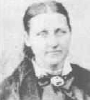
William and Myra met and were married at Cincinnati November 17, 1824. In due time they became the parents of seven children all born in Hamilton County Ohio. Daniel was the oldest being born November 15, 1825. James came next, being born September 18, 1827 at Miami, then Joseph born April 20, 1829 at Miami. Margaret was born August 26, 1331 at Colerain, Sara was born June 6, 1834 at Coleman and died October 6, 1836. Samuel was born July 27, 1836 at Blue Rock, Hamilton Co., and died June 29, 1843 (age about 5) at the same place. (The second child called Samuel not listed here)
Not much is known about Myra's father, but it is recorded that she was born at Saddleworth, York, England to Margaret Mayall on November 1, 1803. Family tradition says her father's name was John Mayall who was born June 22, 1745 and died December 26, 1835, but this is not substantiated. How, why, or when Myra came to America is not known. She said she had a dream one night and saw herself and a man being married, so that later when she met William Henrie she knew he was the right man for her and married him.
Myra was always a very industrious woman and never liked to see anyone idle. She was very talented and full of fun and dearly loved to ride horses.
William was a man of medium complexion. He had blue eyes, clear skin, medium brown hair, weighed about 160 pounds and was about 5 feet 10 or 11 inches tall. He had broad shoulders, strong muscles, and was of a strong wirey athletic nature and build. He was once challenged by a 200 pound negro for a wrestle The negro thought he would be a pushover, but when William pinned him very quickly the negro became very angry, said he was too rough and refused to fight or wrestle him again.
He had owned a 110 acre grove of maple trees and various tracts of land in Wood County, West Virginia which he deeded to his sister, Rachel, and her two children, Roger and Melissa, when he decided to go out to Ohio. It is also recorded in deed book seven page 244 of Wood County that he released his share of the whole estate to his two sisters, Rachel and Margaret Pugh and charged them with the care of their mother, Sara H. Brown
William and Myra settled on the large tract of land on the Miami. Here they build a nice home and had a few negro servants. They built both a sawmill and a grist mill and planted many acres of grain for feed and flour. They built good strong wagons, and made and bought the best equipment of that time to help them in their work. Like their people before them, they both liked horses and acquired fine blooded stallions of the best breed they could get.
Their stables were known and advertised far and wide and breeders came from all over to buy horses for breeding purposes. William was a hard worker and often when he and the boys were working in the corrals or stables he would be reminded of his childhood in West Virginia. One incident he always liked to tell them about was the large stable of stallion of Grandpa Daniel that went on strike.
He said his father had a certain old negro who had been taking care of the animals. They behaved perfectly for him. Then something happened to him. He left the place and neither Mr. Henrie or anyone else could get the stallions to eat. No matter what any one did the horses would not respond. They seemed to be going down hill until Mr. Henrie became afraid he was going to lose some of them. He went to Pennsylvania and hired a certain old Dutchman to come down and take care of them.
The first thing the Dutchman did was to go in and pat all of the horses and speak kindly to them. Then he cleaned all the long mangers out thoroughly until nothing was left in them. He even swept them out and left them that way all day. The next day he took the horses out and worked them hard all day. The next day he gave them each just a little hay and a cup of grain and worked them very hard all day again. They started to look quite bedraggled and other help complained to Mr. Henrie that the Dutchman was killing his horses, so he was going to fire the man. The Dutchman said, "Just go on about your business, Mr. Henrie, and I'll have these horses back to normal in no time at all."
Each day for the next while he worked the horses hard. Little by little he increased their hay and grain until they were back to their old rations. From then on they had no more trouble. They would eat their corn, work harder and show off better for him than for Mr. Henrie or any one on the estate. It was also said they kept fatter and happier under his care from then on.
William and Myra belonged to the Methodist Church and when Parley P. Pratt and Samuel Smith came to their door preaching the gospel of the Latter-day Saints of Jesus Christ, they at first were reluctant to listen. Then they met the Prophet Joseph Smith and said he was the most magnetic man they had ever seen. They had not thought to join the Church, but it seemed there was a power about the Prophet that seemed to take hold of you with both hands and draw you to him. You knew what he said was true. They were converted and held many cottage meeting at their home between 1837 and 1843.
When they accepted the gospel they went all out for it and did everything that the authorities asked them to do. First they were baptized July 17, 1842 in Hamilton County, Ohio by Andrew Lamoreaux. Then they sold as many of their holdings as possible, loaded up several wagons with their belongings, implements, and tools and sent them overland to Nauvoo in the care of servants, hired men, and their young son, James, who was sixteen years old.
Their oldest son, Daniel, did not accept the gospel at the time his father and the other members of the family did, so he stayed behind and took care of things left undone, then followed the family at a later date.
James and the men who went with him traveled from the state of Ohio and over the states of Indiana and Illinois. They encountered foul weather on their trip. There were several severe snow storms, extreme cold, and then high water in the streams and mud holes in the poor roads. Later there was a shortage of water in the prairie country. James remembered that at one time all the water they had to drink was some that had been scooped up in an old tar bucket hanging on the back end of the wagon. It had been caught up as they went through a creek further back. They were never so thankful for anything in their lives and never did water taste so good.
William and Myra and the younger children Joseph, Margaret, and Samuel went by boat down the Miami and Ohio Rivers, then up the Mississippi to St. Joseph where they had patriarchal blessings. At Nauvoo they settled down and became well established. They built and operated a grist mill and bought a farm.
The Prophet Joseph Smith owned three farms in a row at Nauvoo. He sold the one in the middle to William Henrie. From that day on as he passed by their place he would always stop in and rest and chat. Myra would give him a glass of cold milk, or buttermilk, or a baked potato, or a bun or cookie, or whatever she had handy. He would always bless the home and all those who dwelt there when he took his leave. William said he knew he was a true prophet of Cod because he could not be in his presence without feeling the influence and spirit of God which seemed to flow from him almost as heat does from a stove. You could not see it, but you felt it.
They became deeply involved in the Mormon trials and tribulations in Nauvoo. They were constantly in danger of violence from roaming mobs. Fear for their own lives and that of their family and friends was an ever constant companion to them whether working at the mill or on the farm--even in the temple of the Lord.
Nights which once had been a time of rest and relaxation became a veritable nightmare where fathers were yanked from their families and beaten or tarred and feathered and homes burned or ransacked. Sentinels were posted and a watch was kept night and day. William and his boys took their turns and this gave warning of a few minutes sometimes and saved many Saints from painful injury or death.
One night it was this five minute warning which helped their good friend Isaac Morley to escape through the back door, down through a corn field and up into a tree where he hid for ten days while men crazed by liquor and armed with knives and clubs searched for him. His children and friends crept through the corn field at night and hoisted food to him on a stick.
The family had not been Nauvoo too long in 1843 when Daniel followed them west. He still was not converted although he knew the leaders well. He helped his father and brothers keep watch and haul rocks and help in many ways in the building of the Nauvoo Temple.
All of the Henrie boys were of the rugged athletic type and all were fairly big fellows. Daniel was the smallest, but he was strong and wirey. They all loved to wrestle, run and jump and often did it in the less tense moments when they had time. The Prophet also loved and excelled in these sports. One day Daniel related he walked up to one of their high corral gates--it came to his chin as he measured it--then he walked back a little way, took a running jump, and cleared the gate easily. Daniel related that he often beat the Prophet foot racing and also at the high jump, but when the Prophet thought it was his turn to win, and he really tried, he could outdo them all.
Joseph Smith felt at home with the Henries and he never hesitated to ask for anything they had if he needed it. In fact, it was on Daniel's horse that had been borrowed from the Henrie stable that he rode to the Carthage Jail. The trip from which he never returnee alive. It was said the family waved to him as he and Brother Taylor passed the door. Again the Prophet blessed them as he raised his band in a gesture of farewell.
When the meeting was called to choose a new leader for the Church, William and his four sons, Daniel, James, Joseph, and Samuel were all present. They listened to the claims of all who thought they should preside at the Church's head, but when Brigham Young got up and spoke and the mantle of Joseph Smith fell upon him, they all testified that there was no question or any room left for doubt in the minds of all those present. As Daniel said, "As he began to talk he sounded like the prophet, and he took on the appearance of the prophet until we thought it was the prophet reincarnated. We thought he really had come back to us. We were never more wide awake in our lives, and yet there was his apparition before our eyes. It was a soul-stirring experience."
Many years later Marian, son of James, in talking to his father about it said, "Oh, Father, I think you were just having hallucinations." James brought one fist down hard into the other hand with a bang and said, "Hallusi---hell! I saw with my own eyes and heard with my own ears. I was not asleep or dreaming, and I was not along. We all saw it, and heard it, and felt the spirit present. We marveled over it and talked of nothing else for days."
It was the final thing that convinced Daniel that the Latter-Day Saints church was true and divinely inspired. He went down and was baptized in the Mississippi river July 16, 1845 (Temple record)
The next four years were years of hardship and destiny for the the family as well as the great body of faithful God-fearing Latter-Da Saints. They had cast their lot with them. Plunder and persecution continued and all lived in fear of their lives until finally they moved from their homes and crossed the Mississippi on the ice in dead of winter and established themselves with the other Saints at Winter Quarters. Here their oldest son, Daniel, was made official night watch of all the community corralled cattle.
About this time the United States was having a great deal of trouble with the Mexicans in lower California. The President of the U.S. ordered Colonel Allen to recruit a number of men and go the the aid of our outpost there. He asked President Brigham Young for five hundred volunteers for a Mormon Battalion, and the request was filled, Daniel enlisted July 16, 1846 and was assigned to Company D under Captain Nelson Higgins. The whole camp turned out to a big afternoon social for them. They danced and sang and played and finally waved farewell to their loved ones. The drums beat and the flutes played, "The Girl I Left Behind Me" as they marched off.
Daniel's experiences and hardships on this longest march in history, his days of thirst and hunger and weariness finally ending in completion of mission, success in the gold rush, and eventual triumphant return to his people in Bountiful, Utah in 1849, is a story all its own.
His brother, James, took his place on the night watch when he left. William and his other boys planted wheat for the next season and made living conditions as good as they could. They were living in wagon boxes and tents and crude hastily constructed shelters. Many were so tired, sick, and hungry that it made your heart ache.
William and his family had promised Brigham Young, and made a covenant with him before they left Nauvoo that they would use everything they had to forward the cause of the Church and help others with their means and do all they could for those less fortunate on the great march west. They had been slow to accept the gospel, but once they did, no sacrifice was too great to make for it. They still had good strong horses and wagons and the boys were all expert drivers and horsemen which was a distinct advantage on this great journey.
In the spring of 1846 President Young had already chosen a number of men to go with him west to the Rockies to find a suitable place for the members of the church to settle where they could worship God as they wished unmolested. William was a good woodsman, a fire marksman, and hunter. He had good horses and wagons. He had been chosen as one of the second fifty to go with this group, and was assigned to the fifth ten group under Captain Goddard. The other men in his group were Tarlton Lewis, Henry G. Sherwood, Zebedee Coltrin, Sylvester H. Earl, John Dixon, Samuel H. Marble, George Scholes and William Empy.
When the raising of the battalion was asked of the Mormons, President Young had to delay their departure, but when the company finally set out William left his wife and daughter, Margaret, in the care of his three younger sons, James, Joseph, and Samuel. They took care of things until the following year when Brigham Young came back to Winter Quarters to head his second company back to Utah.
There were one hundred and forty men plus three women and two children on the first historical trip. All were given their duties to perform. William was assigned duties as a scout. He with other scouts would ride ahead of the main company and decide where rivers could be most easily crossed, where camp sites were near feed and water, where hostile Indians were least likely to attack them, and many more things.
Since William was not one to talk much about himself, very little of his personal experience is known, only those that applied to the group as a whole and were recorded by someone else. However, he did scratch his name, with others, on the wall of an old cave in Wyoming and family tradition says that he rode into the valley of the Great Salt Lake on July 22, 1847 with Brother Pratt and others, and that a few days later he also helped to scout the Great Salt Lake.
He was there when they laid out the city and decided there should be city lots and plots for farm land. He helped build the old Utah fort, which was located where Pioneer Park is today and which was constructed partly of logs and partly of adobe. He helped the Saints get located in it for their own protection, and was one of the first speakers in the old Bowery which they made of willows. Church records specifically mention him as one of those who talked Sunday, April 26, 1849 when a special prayer and fast meeting was called. This was probably in the Bowery on Tample Square. Others who spoke that day were President Isaac Morley, John Taylor, John Smith, William Major and John Murdock.
He went with Parley P. Pratt to scout Utah Lake, Cedar Valley, and Tooele Valley (Ref. Andrew Jensen) and later in 1849 volunteered and was one of the fourth ten out of fifty men to be chosen by Parley P. Pratt to go with him when he was commissioned to explore Southern Utah by the governor and the Legislative Assembly of the State of Deseret They explored and traveled the country between Salt Lake and the Santa Clara River and went where white men have never been before.
On their return they were caught in a terrible snowstorm. Snow was four and five feet deep on the level. Horses Jumped and drug their bellies in it. of his friends became sick with chills and fever. William's feet were frozen and there was a shortage of food for both man and beast. After more than two months of terrible hardship they finally made their way home and were terribly glad to get there. William was set apart as councilor to the bishop of the First Ward, and for a short time lived in the old Eighth Ward which was near the present City and County Building in Salt Lake. In his scouting about he had seen the tall grass and good feed in the meadows north of Salt Lake. When the Church authorities decided early in the year of 1848 that he should go help Perrigrene Sessions settle what later became Bountiful, he was pleased,
He was given or homesteaded land and built a log house and took advantage of a spot on his ground by which the creek ran and here built a pond with a mill wheel. He would fill up the pond at night, then saw logs and timber until the water was all gone, then customers would have to wait for a couple of hours for the pond to fill before he could start sawing again.
His wife, Myra; daughter, Margaret; and sons, Joseph and Sam left Winter Quarters in the second Brigham Young Company under Captain Heber C. Kimball flay 29, 1848 and arrived in Utah between September 20 and 24, 1848. Their son James came later with Captain Allen Taylor and Samuel Snyder Company. He worked his way by driving a team and wagon.
William's family had all wanted to be located in Salt Lake, but all were sent to the Sessions (Bountiful) settlement with their father. They looked over the rich grounds, abundant feed and streams of water. They too could see it as a land of opportunity. All the boys were allotted or took up more land and worked it. They put seeds into the ground which grew and were not destroyed. In fact, they grew enough wheat that year that in spite of the terrible hazards and crickets, James and Sam arrived in Salt Lake with a huge load of wheat which they gave to the Church for its temple workers. It was all four horses could pull. It was more precious that gold to the Saints at that time. They were blessed by the Church authorities for this kindly act and promised that never would their families be without flour in their homes. This blessing was literally fulfilled.
William next established a grist mill up in the east mountain on Stone Creek. He was always very particular about everything he did and he was always tinkering with his machinery to see that it ran smoothly and just right. Meanwhile Myra assembled children about her and again took up her old job of teaching school.
When the big celebration was held in Salt Lake on the Twenty-Fourth of July in 1849, all of the Henrie family went to the city to celebrate. William marched in the parade as one of the original pioneers. All the Church authorities, bishops, etc., had their special places. Isaac
Morley lead the Nauvoo Legion members and everyone cheered and shouted and slapped each other on the back and gave vent to much patriotic feeling. They then met in the old willow Bowery for prayers, songs, speeches, and finally lunch from their picnic baskets. Many a fried was visited, including the George W. Bradley family, and a most happy day was enjoyed by all.
William's home was located just behind or right near the old Third Ward chapel in Bountiful. He and his boys had helped to build this church and it was said to be the oldest in the state. It was dedicated in 1857 and was first called North Canyon Ward, the Bountiful Ward and still later the Third Ward Chapel.
William's neighbors had been the Cooks and Prescots. Later the Zolers and Marts lived in his house. It was located about four or five blocks east of Main on Fourth North.
William had always been very fond of his sister Rachel and her two children, Melissa and Roger. Through all the trials of moving steadily westward, he had kept in touch with them and urged them to join the Church and come west too. When Melissa got married and started west in 1855, Rachel came with her.
They left Williamstown, West Virginia and traveled by ox team to Sidney, Freemont, Iowa. Here Melissa's son, Joseph, was born July 17, 1855. From there they made their way west with Captain Walker's company and settled in a cellar in Bountiful in 1857. Here with Rachel's help, Melissa gave birth to a daughter, Josephine, February 20, 1858. During the night water had run in covering the already cold, damp cellar floor, but inconvenience and misery was not new to them. They took it in their stride and did the best they could.
Shortly after this Alma Benson came to Bountiful seeking work. He met and married Rachel about 1861, and they left for Hyrum, Utah and lived in a wagon box while the fort at Camp Hollow was being built.
Rachel, her daughter, and William were the only members of their family to Join the Latter-day Saints church or to come west in this early period. Their young brother, Daniel, died in 1826 and their half sister, Mary Brown, married and moved away to Washington D. C., but the grandchildren of Margaret Pugh, and Rachel's grandson, George Wells Henry, still own and live on the Henry land. They take pride in its rolling green acres and on a little knoll on this land, enclosed by a small white picket fence, still can be seen the burial place of William's family.
By this time (1861) all of William and Myra's children were grown and married. Daniel had returned from the long terrible Mormon Battalion March and California Gold Rush in 1849. He had married Amanda Bradley October 29, 1849 at Salt Lake City, had bought a fine farm at Bountiful with some of his gold nuggets and then had gone on an eventful trip to Manti to see Amanda's folks and got caught in a terrible snowstorm. They were detained there for six weeks in Salt Creek, or Nephi Canyon, and almost lost their lives before they were rescued.
After their return home and the birth of their first child, Mary, Sept. 4, 1850 at Bountiful, they were called by the Church authorities to go to Manti and help with that settlement. Daniel understood and spoke the Indian language and was a great influence in keeping peace with the Indians. On several occasions when violence flared, Daniel took part in the encounters.
He raised the first fruit and nut trees, introduced the first turkeys and honey bees, and became a leader of both civic and church affairs of that city. He aided both spiritually and financially in the building of the Manti temple, being the greatest single cash donator.
He had 14 children by Amanda. On June 17, 1856 he married Susan Colman by whom he had 12 children.
Their son Joseph had married Susan Duncan January 29, 1851 and had three children (they had also lost 2). He had also taken another wife, Susannah Lesley in Bountiful about 1857 or 1858 when the church authorities sent him up to help settle Cache count,-. He settled at Millville about 1859. He later married a third wife, Olive Pitkin. He raised large families by each of the first two wives, and adopted one boy from the third, then later went into Idaho and helped pioneer the country around Rockland.
Their daughter, Margaret, married Moses Daley November 2, 1852 and had two children (one of whom died) before they moved to Springville, Utah. About 1859 they decided to move to San Bernardino. They had one child in Springville and four more after they reached San Bernardino, making seven in all.
They pioneered in San Bernardino and Riverside, California laying out and building roads and canals, plotting city streets, planting orchards, and vineyards and doing all they could for the growth and prosperity of these places. They were known far and wide for their generous hospitality. Out of love and respect for their achievements a monument was erected to them in the public square to do honor to them.
About 1865 'William and Myra and their other two sons, James and Samuel and their families were called on a mission by the Church authorities to go south to the "Muddy" and settle Panaca in the old Dixie Mission.
The boys had made several trips back to the Missouri River to give help to less fortunate families. They had mad a trip into Oregon to bring sugar factory machinery and equipment to Utah for the Church. They had helped fight Indians in Utah County and southern Utah besides trying to take care of their own affairs. With all the scouting and work William had done for the Church, he was quite upset and very unhappy about this latest call. So many time before he had labored long and hard to build something around him only to leave it for someone else as he steadily moved west. Now he was tired. He liked the place he had and the friends who lived near him. He probably felt too tired to do more pioneering. At any rate he refused to go.
Myra felt different, however. She thought that inasmuch as the Church had called them on this mission, they did not have the right to refuse. Since James and Samuel felt the same way about it, the call was heeded by them. There was a division of property. William gave them money, outfits, and provisions to make the trip, but he stayed in Bountiful,
James by this time had married Rhoana Hatch of South Bountiful on December 28, 1850 and had six children. He had recently married another wife, Christena Schow on December 6, 1861. They owned a nice farm and house, equipment and other property in South Bountiful. Samuel had married Isabella Ellis and they also owned land and a home, furniture, wagons, horses, etc., in Bountiful.
After the decision was made to go south, they all helped load up three large wagons with tools, machinery, household goods, clothing and seed grains. They took their families and all they had and left for Panaca. This was about 1861, or 1865. Myra went with them. They had a very hard trip with poor roads, storms, and mud holes. Shortly after their arrival Isabella gave birth to her second child in the wagon box in the midst of a rain storm. Rhoana and Christena held pans and tried to protect her from. the rain while Myra attended to Isabella and the baby in place of a midwife or a doctor.
The boys were having their troubles too. It seems there were some of the old Nauvoo mob members who had worked their way west and were working in the gold and silver mines at nearby Pioche and Caliente. On Saturday nights, or any other time for that matter, nothing pleased them more than to get all liquored up, then ride into the Mormon settlement of Panaca toting guns, whooping and hollering, and looking for trouble.
The Henrie families, as well as the other settlers who came with them, worked day and night to build a fort where they could all gather quickly for their own protection. Twice its worth paid off when the Indians wiped out the settlement.
In spite of all these troubles, Myra and her boys pooled their resources and together they started a store called the Co-op. Myra helped clerk and Sam and James would make two trips to Salt Lake each year to bring back freight and dry goods. They acquired these at very high prices-meat, eggs, butter, etc. from other freighters who brought them in. But in spite of how hard they all worked, or what they did, conditions proved to be very miserable for the families at Panaca.
They lived under the most trying conditions for six years, then the land was surveyed and it was discovered that Panaca was in Nevada and a dispute over taxes arose. They sought advice from the Church authorities on what to do and as a result they were released from this mission and told they could leave and settle where they wished, but it was the desire of the Church that they go over to help reinforce the settlement of Panguitch. They felt they were obliged to go there.
In the fall of 1871 they all moved into the old mud fort at Panguitch and stayed there for about three months. They had to protect themselves and help protect others from the Indians in this second settlement of Panguitch. As soon as possible, the Henrie boys were out building homes outside for their families, even against council. The Indians were still vary dangerous and treacherous anywhere in this area. James built the first real nice hewed log house with siding finish. Sam's house was the first brick one finished outside the fort. It was red brick, two stories, large, roomy, and quite a mansion, it was thought for this desolate country. He imported a mason from England to build it.
Partly because they had room, and partly because their family wasn't so large as James', Sam and Isabella invited Myra to come and live with them until they had time to build her a home of her own. She was only too glad to accept. She was of great help and consolation to them when the men had to be away freighting during their sedge of black smallpox. When it was needful for someone to stay at the home in the town while other of the family camped at the ranch, she stayed. She was never the type to be idle for a minute and immediately saw an opportunity to use her talents as a teacher again where it would do untold good. She became the first teacher in that part of the state.
Her sons built her a nice little home so she could do as she pleased. She moved into it and hired Gedski Schow, a fine young girl, to help her here and at the store. It was not long before her son, James took Gedski for his third wife and Myra began using her home as a school house and moved back to live with her son Sam and his family. She remained there for thirty years.
It is said that Myra was a very good disciplinarian and always kept a switch in the corner to use on unruly students if the occasion arose. No one of her students can ever remember of her having had to use it. She had a strong voice and persuasive manner that demanded respect. When she spoke she meant what she said and all her students knew it was best that they learn the lessons she assigned them, and they did. The switch was purely for psychology and decoration, but in those days it would have been used had it been needed.
Myra was the undisputed boss of her family even though they were grown. She was a wonderful woman with a brilliant mind and a great sense of humor. Her sons Daniel and Joseph took after her in this respect. She could always see the funny side of an incident and would laugh and enjoy the situation to the utmost. One time she warned her grandson, Harion, not to get into the corral with a certain big mean old ram. When he disobeyed her and the ram came full tilt giving him a bunt on the rear end that sent him rolling like a cartwheel clear out of the yard and under the pole fence, she laughed until the tears ran out of her eyes.
At Halloween time she used to like to dress up like a witch or a gypsy and tell fortunes or read palms, jig, play the harmonica, and in general have a good time.
Myra was sharp when it came to business, too, and hard headed when she was sure she was in the right. She had rare good judgment and had to be shown before she would give up and admit defeat in anything.
She invested heavily again with James and Sam when they pooled their resources and established the first mercantile store in Panguitch. James became superintendent of this institution and people Jokingly called the place, "The old sow" but it served the people well.
Myra had wanted William to pick up and go to San Bernardino, California to live when her daughter Margaret and husband Moses Daley were sent there to settle but William declined. Now James and Sam decided they wanted to establish a freight line between Panguitch and there. Myra enthusiastically helped them; and on one occasion after the water barrels were all filled up, the crates of eggs and bacon were in place and the six span of horses were all harnessed and ready to go, Myra climbed up on the seat of the prairie schooner and said, "Let's go, boys. I'm going to make this trip, too."
When she arrived it was double cause for rejoicing for her granddaughter, Myra Estel was being married. There was a big reception with friends gathered from all over. The bride was a vision of loveliness in white silk and Spanish lace. Long tables in the big hall were laden with delicious food. On the middle of the lace covered center table rested a huge yellow pumpkin, the largest Myra had ever seen. She just couldn't seem to take her eyes off it. She wondered why it was there and whatever was in it. The place was crowded. Men in their best black suits and ladies in satin and lace were everywhere. There was wine and fiddlers, singers and dancers, and everyone was having a good time. Then they took the lid off the big pumpkin and to Myra's surprise it was filled with all kinds and colors of luscious Juicy grapes from their own vineyards. It was the most festive and elaborate affair Myra had been to in her whole life.
The Daleys had made a name for themselves in California. Margaret was an especially bright and levelheaded woman. It was she who had drawn the plans for the first water storage system of San Bernardino. They were so well planned that they are still in use today.
Myra from the time of her youth in England had always loved horses and she and William had raised many of them in Ohio. Now it was only natural that she invest in some in Panguitch. She had her boys purchase some Percheron and Hamilton stud horses and some good mares in Salt Lake from Brigham Young and the Kimball boys, some they had brought out from the East and some they bought in California.
They put these with what they already had and raised horses and sold teams both for work and freighting. They also bred and raised stud horses, and racing ponies. The latter they would race on occasions of celebration. They even placed blooded stallions on the range in the Henry Mountains and built up the bands of wild horses which roamed there. They would round these up way down below the Arizona border along the Colorado River and as far north as Sheep Valley in Emery County, Utah. They would break them to the saddle or for whatever purpose they need them for. Some of the most beautiful stallions you ever saw came from this source and are movie material today.
Myra was always a very religious woman. She always attended church and paid an honest tithing down to the last penny. She donated heavily to the Church in other ways too, and was always on hand to help in case of sickness or death or in any way she could.
She was the first president of the Relief Society in the Panguitch Stake and gave many years of untiring service to this wonderful organization.
In her youth she was a well-built young girl about 5 feet 5 inches tall with blue eyes, medium brown hair, and fair complexion. She became quite plump as she grew older. She was a good seamstress good cook, and was extremely tender-hearted.
In her room, on an especially hand-made pedestal rested the big family Bible she had brought from Ohio. This was always a source of comfort to her. Day or night it was handy for her to read a verse of scripture or to look up a reference when she felt she needed it. Her room also boasted other pieces of hand-made pioneer furniture, each scratched with the history of travel, usefulness, and memories. None of these gave her quite the physical comfort of her big old fluffy feather tick. She had brought it across the plains and it seemed to her she had been sleeping on it all her life. A piece of sage advice she passed on to the brides of her family was, "Never leave the bed of your husband and start sleeping alone. Your chance for a long and happy married life will be greater."
Myra never returned to William in Bountiful, but the boys and grandchildren sometimes visited him, and many a grandchild was made happy when he let them play in the millpond or when he took a dime and hammered out a silver ring for them.
In his young days back in Ohio, it was said that William decided the surname of Henry was too common. It was always getting mixed up with given names, so he changed the spelling to Henrie and said, "From now on all will know that if they end the name with and 'ie' instead of 'y' they are my descendants or relatives."
After his wife and last two sons left him and accepted the mission call to Panaca, Nevada, William sort of became a recluse. He withdrew from public life and never mixed more than was absolutely necessary to carry out his church duties. He was known by the younger generation as a "good old man." Everyone respected him for his honesty and integrity. Everyone knew that when his word was given you never need hesitate to depend on it.
He worked and lived alone in his spotless little log house. He could often be seen grinding a little extra corn on a hand mill, or feeding and petting his cat.
He bought a lot in the Bountiful City cemetery on the second street running south. It was here he was buried after his death December 18, 1883.
His will deeded every bit of his property to the church. He left his surviving wife and children an old rocking chair and other beat-up pieces of furniture, his old clothes, and one dollar each. He probably felt that he had divided his property when his family went south, and since they had done well he would be putting what he had to greater good by helping the church. This indeed had been his first love since the day he embraced it.
Myra lived ten more years with Sam and his family. A few months before she died she went to live with James and Rhoana. She died February 3, 1893 and was buried at Panguitch, Garfield County, Utah in the lot belonging to her son Sam.
She lacked only eight years of having lived a century, but she lived to see a mountain, the Henry Mountains, and a settlement, Henrieville carry the family name. Names given as a gesture of love and respect for work, devotion and services of members of her family.
Thus ends the story of William and Myra Mayall Henrie whose progenitors came from the British Isles to help colonize the new world, and whose descendants have covered the continent as leaders of business, industry, and mankind. Each played their part and took their place in the great heart beat of America.